Activities
for 2009-2010
The
Chicago Circle of the Ecole Freudienne du Quebec
in conjunction with the Chicago Center for Psychoanalysis
Cordially
invites you to attend:
The
Clinical Days of the School of GIFRIC
(The Interdisciplinary Freudian Group for Research
and Clinical and Cultural Interventions)
The Visible and the Unspeakable
November
12-14, 2009
A day and a half of intensive teaching with case presentations,
commentaries and theoretical presentations by the analysts of GIFRIC
will be preceded by a public lecture on Thursday evening, Nov. 12
and will conclude with an aesthetic presentation on the life and
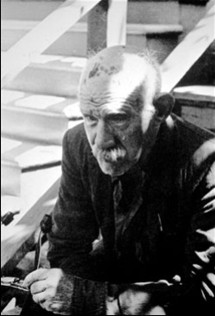
work of outsider artist Henry Darger on Saturday afternoon, Nov.
14
Location
- Chicago Center for Psychoanalysis
Conference room -- 4th Floor
325 N. Wells St. Chicago
Schedule:
Thursday
Evening, November 12, 7-9:30pm:
The
Problematic Position of Psychoanalysis
in Our Post-Modern Culture
A public lecture by the analysts of GIFRIC
Willy Apollon, Danielle Bergeron, Lucie Cantin
The speakers will address the position of psychoanalysis in contemporary
culture. They will explore the interface between neuroscience and
psychoanalysis and will draw a contrast between psychoanalytic and
psychiatric treatment of psychosis – as informed by their
27 years experience at “Le 388” – the psychoanalytic
treatment program for psychotic young adults they developed.
In
our post-modern era the certitude that scientific progress will
resolve all problems that plague humanity has been found wanting.
In the field of mental health, behavioral and medical interventions,
ameliorate some conditions, but leave untouched the problems presented
by the immaterial human subject.
By way of contrast the November Clinical Days presents an opportunity
for clinicians, scholars and artists to learn about a particular
Lacanian perspective nourished by 27 years of rigorous work at “Le
388” the psychoanalytic treatment program for psychotic young
adults they founded in 1982. Their efforts resulted in 2/3 of chronically
psychotic individuals having returned to productive and fulfilling
lives in the community.
This achievement rested upon a reformulation of Freudian metapsychology
from a Lacanian point of view - a process that was nourished in
its development by the clinical breakthroughs that evolved from
this change in perspective.
This unique theoretical perspective not only extended clinical work
to psychotics, but also resulted in advances in the treatment of
neurosis and perversion and into certain resistances frequently
encountered in the treatment of women.
Friday,
November 13, 9:30am -5:30pm
and Saturday, November 14, 9:30am-12pm
The
Clinical Problems of Delusion and Enactment
Illustrated
by three case studies with commentary and teaching by the analysts
at GIFRIC.
GIFRIC
(The Interdisciplinary Freudian Group for Research and
Clinical and Cultural Interventions) received the Hans W. Loewald
Memorial Award in recognition of its contribution to psychoanalytic
theory, history, and application, most notably concerning the development
of the psychoanalytic treatment of psychosis. This award was presented
to GIFRIC in 2004 by the International Federation for Psychoanalytic
Education (IFPE).
Willy
Apollon, Danielle Bergeron and Lucie Cantin are co-authors of Traiter
la psychose (1990), published by GIFRIC (in French and translated
in Spanish), After Lacan: Clinical practice and the subject of the
unconscious (2002), SUNY Press and La cure analytique du psychotique/
enjeux et stratégies (2008), published by Gifric, Québec.
Willy Apollon, Psychoanalyst and Philosopher (Paris,
Sorbonne). He is Supervising Analyst, and Analyst Consultant at
The 388, the Psychoanalytic Treatment Center for Young Adult Psychotics.
Past President and founder of GIFRIC, he is responsible for research
at the Center for Research and Training of GIFRIC, and Director
of the Psychoanalytic Center for the Family. He is author of La
Différence sexuelle au risque de la parenté, Psychoses:
l’offre de l’analyste, L’Universel, perspectives
psychanalytiques, published by Gifric. He has contributed to over
thirty works and published more than one hundred articles in Québec
and in international journals on the topics of psychosis, the formation
of analysts, the psychoanalytic clinic, perversion, æsthetics,
family, and the analysis of cultural, social and political practices.
Danielle
Bergeron, M.D. Psychoanalyst and psychiatrist. She is supervising
analyst and responsible for teaching at GIFRIC Center for Research
and Training; Associate Professor of Psychiatry at Laval University;
Director of The 388, the Psychoanalytic Treatment Center for Young
Adult Psychotics; Responsible for the Short-Term Analytic Therapy
Program at Robert-Giffard Hospital, Distinguished Fellow of the
American Psychiatric Association; member of the Freudian School
of Quebec. She has several publications on the clinical stakes of
psychical structures, the psychoanalytical treatment of psychosis
and neurosis, femininity, art and aesthetics, and psychosis/psychiatry/
psychoanalysis and society.
Lucie
Cantin, Psychoanalyst and psychologist. She is Supervising
Analyst and Co-director of training at GIFRIC; Clinical Professor
of Psychology at Laval University. Since its foundation in 1982,
she is Assistant Director of The 388, Psychoanalytic Treatment Center
for Young Adult Psychotics. She is responsible for publication and
training at the Center for Research and Training of GIFRIC, Editor
of the review Savoir, journal of psychoanalysis and cultural analysis,
and Vice-President of GIFRIC. She has several publications on the
psychoanalytic treatment of psychosis, the clinic of neurosis, on
mysticism, femininity, masculinity, and perversion.