Activities
for 2010-2011
The
Psychoanalytic Circle of Puerto Rico
and L’Ecole Freudienne du Québec
cordially invite you to
Clinical
Days in San Juan
“El
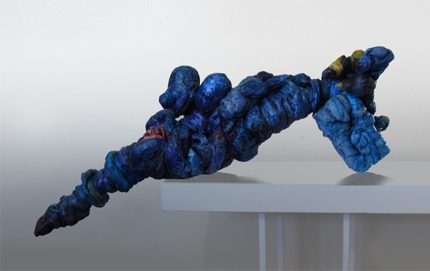
Huesped” Elizabeth Robles
With
clinical presentations by members of the Psychoanalytic Circles
of the Freudian School of Québec combined with teachings and discussions
led by GIFRIC training analysts Willy Apollon, Danielle Bergeron
and Lucie Cantin.
February, Friday 18 and Saturday 19, 2011
at “Centro de Adiestramiento Profesional”
at the University of Sagrado Corazón, Santurce-San Juan, Puerto
Rico
Registration
Fee: US$225
Registration
form

Please
send your registration form with payment
on behalf of Círculo Psicoanalítico de Puerto Rico
to the following address:
1007
Avenida Muñoz Rivera
Oficina 801
San Juan, Puerto Rico
00925
Thanks!
For information please contact us:
circuloppr@gmail.com
nevaresmayra@gmail.com
Activities for 2006-2007

March
1-2, 2007
With
clinical presentations by members of the Psychoanalytic Circles
of the Freudian School of Québec combined with teachings
and discussions led by GIFRIC training analysts Willy Apollon,
Danielle Bergeron and Lucie Cantin.
Thursday, March 1st and Friday, March 2nd, 2007
8:00 a.m. – 5:30 p.m.
Institute of Neurobiology, 211 Del Valle Boulevard, Old San Juan
A presentation of the Psychoanalytic Clinic for the Family in
Québec and Montreal will take place on Friday.
Admission: US $225
Make checks payable to: Círculo Psicoanalítico de
Puerto Rico. Checks for registration should be sent (postmarked)
no later than January 30, 2007. Registration after that date will
be US $250. Please send checks to Círculo Psicoanalítico
de Puerto Rico, 1007 Muñoz Rivera Ave, Suite 801, San Juan,
Puerto Rico 00925-2724
For further information please contact:
Mayra Nevares Alfredo A. Carrasquillo
Tel (787) 568-6414 Tel (787) 646-8647
Activities
for 2004-2005
Quebec
at the Caribbean:
the effects of the visit of members of GIFRIC to
San Juan, Puerto Rico
Mayra Nevares Ph.D.
On
February 12, 13 and 14th, 2004 and at the Center for Public Policy
Research in San Juan, the Clinical Days of the Freudian School of
Québec took place in Puerto Rico. Participants from Québec
and Montreal spoke in French; colleagues from Boston, Chicago and
San Francisco spoke in English; and locals from Puerto Rico, Argentina,
Chile, Dominican Republic and Ecuador spoke in Spanish. This great
cultural mix didn’t turn into a Babel Tower thanks to the
excellent job of three translators (we always had two on every meeting)
and a great desire of all the participants to learn and share their
work.
The
seminar consisted of the presentation of clinical cases that were
then discussed by the group and supervised by Willy Apollon Ph.
D. and Lucie Cantin M.Ps., training analysts at GIFRIC (Groupe Interdisciplinaire
Freudien des Recherche et d'Intervention Cliniques et Culturelles).
The diversity of cases presented was enriching. From presentations
of cases of patients that had been in analysis for some time and
where dreams were analyzed and the analytic technique was refined,
to cases were practitioners were starting a psychoanalytic work,
cases of work with children, and the unique experience of the Family
Clinic of Québec and Montreal. The themes discussed in this
seminar were varied and of fundamental importance to our formation
as analysts. Of all the issues discussed, it was particularly relevant
to me what was discussed on the specificity of psychoanalysis as
a clinical practice and how to guide our daily work. During these
clinical days and those immediately after the seminar I found myself
thinking about the three dimensions of the experience that flow
together in the clinical practice of all of us and which I see as
essential to the clinic of psychoanalysis. These three aspects should
not be confused and they should be taken into account in the psychoanalytical
experience. These aspects are: the particular subjective experience
of each patient; the cultural specifics that contribute to the ideologies
of the subject and its everyday experience, and the universal aspects
that constitute the human experience as well.
On the one hand the psychoanalytical experience, the clinical experience
of working with analysis is based on the particular subjectivity
of each analisand. Each person that comes to our office is unique:
his or her history, her symptoms, the fantasy that determines him,
everything that person brings to the analytical scene should be
listen to as a particular and unique account. In the way that we
listen there is no generalizations allowed. The psychoanalytical
diagnosis does not authorize us generalizations about the treatment
and about patients. As a matter of fact, Freud and Lacan, in different
moments, made the analogy between a psychoanalysis and a chess game:
we can plan moves for the beginning of the game, we know of ways
it can end, but we never can predict how the game is going to be
played. Only on the experience of listening to the unconscious,
one person at a time, is it possible “après coup”,
to bear witness to the play of signifiers, to the meaning of the
symptom, to the family narrative, to the playing out of the phantasm,
to all that is constituted in a unique way on each subject’s
account and subjective structure.
On the other hand there are cultural specificities that contribute
to the particular ideologies of the subject. To my surprise this
cultural specificities were not as important as I thought. There
is a difference in how a meaning is constructed on a specific culture
or subculture or on what a signifier points to in that particular
cultural scenario. The cultural differences are important to understand
the particular ideology of a subject or how a particular experience
is signified on that cultural context. The way that families are
structured in Puerto Rico, for instance, is definitely not the same
as it happens with families in Québec. But as a matter of
fact the same difference can be found between middle or upper class
families in Puerto Rico and poor families of the public housing
projects. How we structure the external aspects of our practice
(our office space, the time and spacing of the visits, the family
members we see, the cost of the session, etc.) is influenced by
this differences. But the experience of the analysis, the experience
of listening to what comes from the Unconscious is the same in San
Juan, in Boston, in Québec, in Montreal or in San Francisco.
The analytical experience is based on the fundamentals of the human
experience. We are born of man and woman, we lost our organics instincts
due to the trauma of language, we assume a masculine or feminine
position due to a complex process of subjectivity that inserts us
as subjects in the human culture. This subjetivation process turns
our organism into an erotic body and differentiates us from the
biological order of the rest of the animals. Freud points to the
fundamental nature of the experience of the unconscious, of that
which is outside of the conscious experience, of that which insists
and repeats itself in the story of each one of us, of that we don’t
want to know about and that appears in the symptom, in the lapsus,
in the dream, in wit and in repetition.